
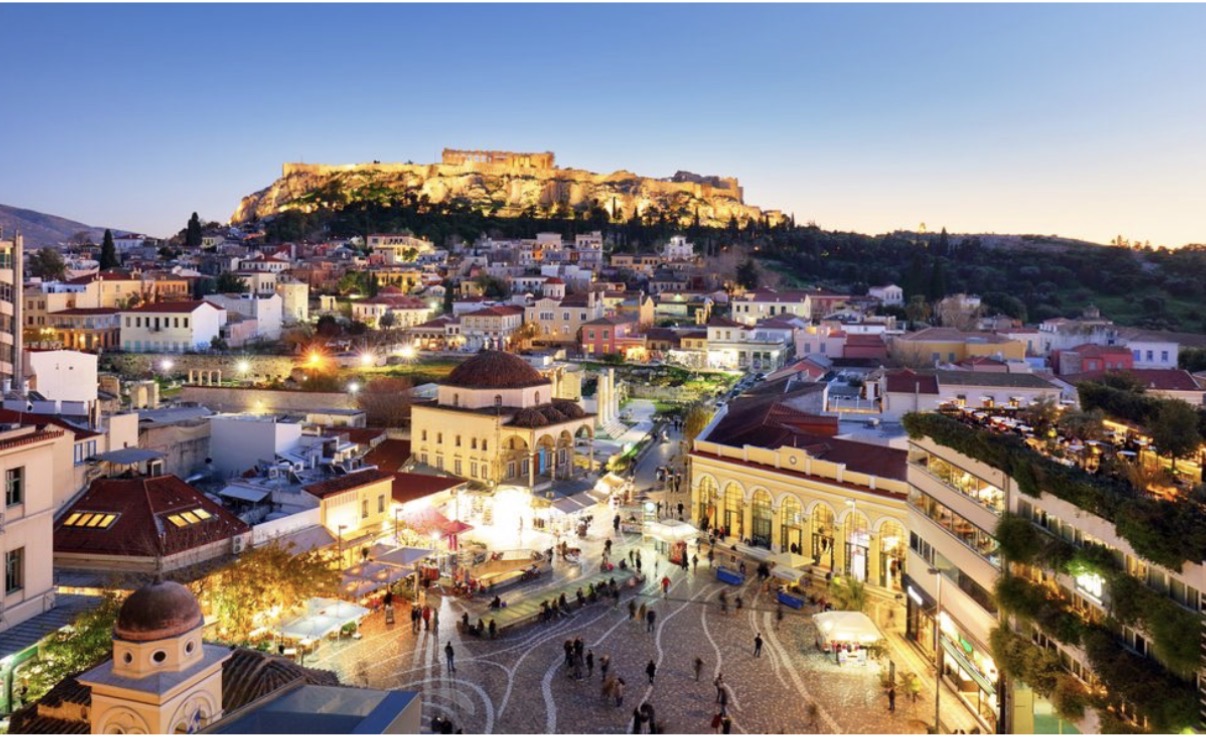
For years, British buyers looking for a home in Greece tended to start with the islands. Athens was somewhere to fly into before heading elsewhere.
That view is changing.
The Greek capital now offers a combination that is difficult to find in many Mediterranean destinations: a major European city, relatively accessible property prices in some districts, established year-round neighbourhoods and a coastline within easy reach of the centre.
For Britons thinking beyond a holiday home, that matters. A place that works for two weeks in August is not necessarily somewhere you want to manage a school run, visit a doctor, work remotely or spend January.
Athens has another advantage: choice. The capital is not one residential market. Central neighbourhoods, established family suburbs, regeneration areas and the Athens Riviera offer very different versions of Greek life.
The challenge is deciding which one fits.
Athens works when Greece needs to become home
A permanent move changes what matters.
Restaurants and beaches still count, but so do hospitals, airports, schools, public transport, shops and reliable services throughout the year.
Athens scores well on those practical measures because it is home to more than three million people across the wider metropolitan area. Its economy does not disappear when the summer season ends.
That makes it particularly relevant to British professionals who can work internationally, families who need schools and healthcare, and retirees who want Mediterranean living without becoming dependent on seasonal island infrastructure.
Anyone considering moving to Greece from UKshould settle these broader questions before choosing a property. The practicalities of residence, healthcare, tax and everyday administration can shape the move just as much as the location of the eventual home.
A detailed guide to Moving to Greece is therefore a useful starting point before narrowing the search to Athens itself.
The neighbourhood changes the experience completely
One of the easiest mistakes a newcomer can make is treating Athens as a single property market.
It isn’t.
Kallithea sits between central Athens, Piraeus and the southern suburbs. Its appeal comes from connectivity, established residential demand and prices that remain below the premium coastal districts.
Piraeus offers something different. Greece’s principal port supports employment and economic activity, while regeneration has changed parts of the surrounding area. It can appeal to buyers comfortable with a district still evolving rather than paying a premium for somewhere already established.
Central neighbourhoods such as Pangrati and Koukaki offer another version of Athens: walkable city living, restaurants, culture and proximity to the historic centre.
Then there is the Riviera.
Glyfada, Voula and Vouliagmeni place the sea much closer to everyday life, but property prices reflect that privilege. Further north, Kifisia appeals to families looking for greenery, larger homes and an established residential environment.
The right choice depends less on which district is fashionable and more on how someone expects to live.

Buying for yourself is different from buying purely for investment
This distinction is easily overlooked.
An investor can concentrate on rental demand, acquisition price, resale liquidity and potential capital growth. Someone planning to occupy the property needs to add another list.
How far is the supermarket? Is there a hospital nearby? What is the commute like? Can children reach school without spending hours in traffic? Is the neighbourhood pleasant on a wet Tuesday in February?
The answers can point buyers towards very different parts of Athens.
Kallithea, for example, may lack the international prestige of Glyfada but offers access to central and southern Athens without Riviera pricing. Kifisia can work particularly well for families who value space over proximity to the sea. Pangrati may suit someone who wants restaurants and city life within walking distance.
Researching the best areas to buy property in Athens is therefore less about finding a universal winner and more about matching a neighbourhood to a budget and way of life.
The Riviera has raised Athens’ international profile
Southern Athens is receiving attention for good reason.
The coastline already includes some of the capital’s most desirable residential areas, while the redevelopment of the former Ellinikon airport is bringing major new investment into the area.
Glyfada is the clearest example of an established coastal market. It has shops, restaurants, beaches, golf and a sizeable residential population. Voula and Vouliagmeni move further towards the premium end, combining coastline with constrained supply and high property values.
For someone relocating from Britain, the appeal is obvious. It is possible to live beside the Mediterranean without giving up access to a major capital city and international airport.
The compromise is price.
The source guide reports June 2026 asking prices of around €5,341 per square metre in Glyfada and €5,603 in Elliniko, compared with approximately €2,936 in Kallithea and €2,628 across Piraeus. These are asking rather than completed transaction prices, but the difference illustrates the premium attached to southern Athens.
A sea view can be expensive.

More affordable Athens still exists
Not every British buyer arrives with a Riviera budget.
Peristeri shows another side of the market. It is a large western municipality with metro connections, local commerce and a substantial resident population. The attraction is not international glamour but affordability and an existing community.
The source guide recorded June 2026 asking prices of approximately €2,309 per square metre in Peristeri.
That can allow buyers to acquire more space for their budget than in southern Athens.
But cheaper should never be confused with better value automatically.
A lower purchase price matters only if the property is somewhere people genuinely want to live. Transport, shops, employment, neighbourhood quality and eventual resale demand still determine whether an apparently inexpensive purchase proves sensible.
This is particularly important for newcomers who may be tempted to compare Athens property solely by price per square metre.
The street matters as much as the postcode.
The property itself needs proper scrutiny
British buyers can find the Greek purchasing process unfamiliar, particularly when older apartments, renovations or converted buildings are involved.
Independent legal and technical checks are essential.
Ownership and title need verification. Planning status matters. Previous alterations should be checked. An engineer can identify structural or technical problems that may not be obvious during a viewing.
New-build and off-plan purchases bring different questions: the developer’s record, planning permissions, payment stages, completion timetable and exactly what the finished specification includes.
None of this is especially exciting.
It is considerably more exciting than discovering a problem after completion.
Buyers should also calculate the full cost rather than focus exclusively on the advertised price. Taxes, notary costs, legal work, technical inspections, registration, insurance, furnishing and ongoing property expenses can all affect the final figure.
Athens can serve two purposes at once
One reason Athens attracts internationally mobile buyers is that the same property can potentially serve both practical and financial purposes.
A home can provide a European base while retaining rental or resale value. A retiree might live there permanently. A professional could divide time between Britain and Greece. Parents may eventually use the property differently as family circumstances change.
That flexibility is valuable, but it should not encourage buyers to blur the distinction between a home and an investment.
A superb home can be a mediocre investment. An efficient rental property may be somewhere its owner would never choose to live.
The strongest purchases often sit somewhere between the two: a property in a functioning neighbourhood, with genuine local demand, that the owner would also be comfortable occupying.
Everyday Greece begins after the property search ends
Relocation is ultimately about considerably more than acquiring an apartment.
The experience of Living in Greece includes the climate and outdoor lifestyle that attract people in the first place, but also bureaucracy, healthcare, language, taxation and the realities of establishing a routine in another country.
Athens can make that transition easier because newcomers are not sacrificing the infrastructure of a major city.
It also allows residents to choose how Mediterranean they want their daily life to feel. Someone can live in the dense centre, an established northern suburb or close to the beaches of the Riviera while remaining within the same metropolitan area.
Few European capitals offer that range.
Athens deserves to be judged as somewhere to live
British interest in Athens should not be reduced to cheap property or another Mediterranean investment story.
Parts of the city are no longer cheap. Prime southern Athens certainly isn’t.
What Athens offers instead is breadth.
There are neighbourhoods built around city life, others suited to families, areas undergoing regeneration and coastal districts competing for international buyers. Some offer value; others offer scarcity and lifestyle.
For Britons considering a permanent or semi-permanent base in Greece, that variety is arguably the city’s strongest advantage.
The decision should begin with the life someone wants to lead and only then move to the property capable of supporting it.
That is a rather different approach from buying somewhere because it looked beautiful during a week’s holiday.
It is also a better way to choose a home.