
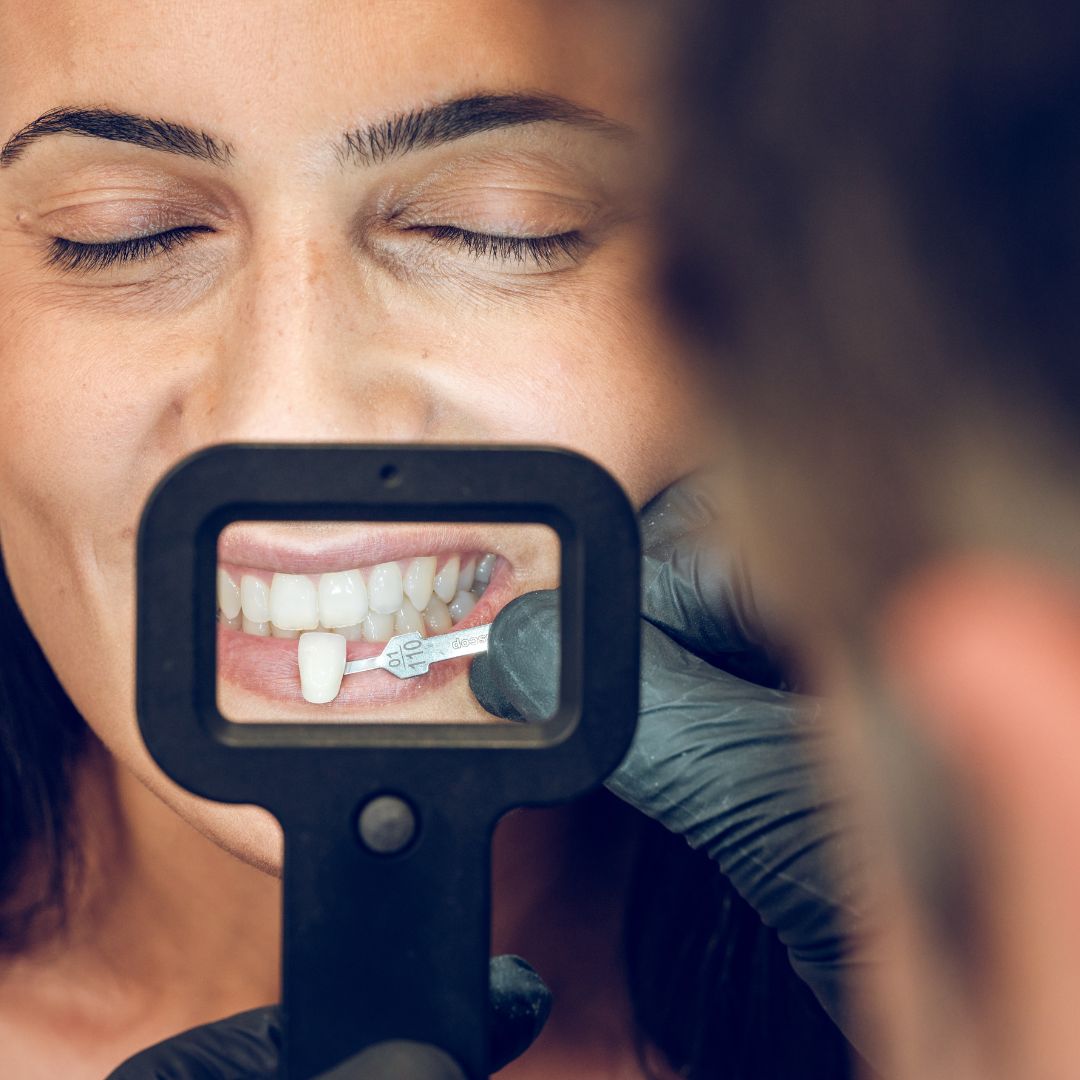
For most of cosmetic dentistry’s history, patients had to take a leap of faith. A dentist would describe a treatment plan, maybe sketch something on paper or hold up a shade guide, and the patient wouldn’t actually see their new smile until the veneers were already cemented in place. If the result wasn’t quite right, fixing it meant redoing irreversible work.
Digital Smile Design changed that equation, and it’s now reshaping how serious cosmetic dentistry cases get planned from the very first consultation. Understanding what it actually involves, beyond the marketing buzzword, helps explain why it’s become a meaningful differentiator between clinics that plan carefully and clinics that don’t.
What Digital Smile Design Actually Is
Digital Smile Design, often shortened to DSD, is a structured planning protocol that uses standardized facial and dental photography, and often video, to map out a patient’s new smile before any tooth is touched. Rather than relying purely on a dentist’s visual judgment or a generic shade chart, the process measures specific facial and dental landmarks: the midline, the smile line, tooth proportions, and the relationship between the gum line and the upper lip.
A widely referenced description of the DSD protocol outlines the workflow in three standardized views, frontal, occlusal, and a twelve o’clock angle, combined with a digital ruler calibrated against a real measurement on the patient’s own teeth. This creates what’s called a facially guided smile frame, a digital map that becomes the foundation for everything that follows, from a 2D design proposal to a 3D printed model the patient can actually hold and see in their own mouth.
From Photos to a Physical Mock-Up
The process doesn’t stop at a digital rendering on a screen. A case description published in the Journal of Conservative Dentistry walks through how preoperative photographs feed into a digital design, which is then translated into a diagnostic wax-up and, ultimately, an intraoral mock-up the patient can try on before any permanent treatment begins. In that specific case, the clinicians noted that the digital simulation alone wasn’t always enough for the patient to fully grasp the planned changes, which is why the mock-up step, letting the patient see and feel the proposed result directly in their mouth, remains a critical part of the process even in a fully digital workflow.
This mock-up phase is where DSD delivers its most practical benefit. Instead of approving a treatment plan based on a 2D photo or a verbal description, the patient can look in a mirror at conversation distance and see roughly how their new smile will look and feel before a single tooth is prepared. If something feels off, shape, length, the overall balance, it gets adjusted at this stage, not after the final restorations are already bonded.
This is also where material choice enters the conversation, since the digital design needs to account for how light interacts with the veneer material being proposed, not just its shape. Darya Dental Clinic’s comparison of the top veneer brands outlines how materials like E-max, Empress, and DaVinci differ in translucency and preparation requirements, details that a DSD mock-up should reflect rather than treating every veneer material as visually interchangeable.
Does Digital Planning Actually Improve on Traditional Methods
It’s worth being honest about what the evidence actually shows, rather than treating DSD as automatically superior simply because it’s newer. A comparative study published in PMCexamined analog wax-up mock-ups against fully digital workflow mock-ups and found no statistically significant difference in overall aesthetic outcomes between the two methods, with the conventional approach scoring marginally higher on certain smile criteria in that particular comparison.
This doesn’t mean digital workflows aren’t valuable, it means the value isn’t purely about producing a prettier final result through software alone. The real advantage of DSD lies in communication, predictability, and efficiency: the ability for a dentist, a patient, and a dental laboratory technician who may never meet in person to all reference the exact same measurements and visual plan, reducing the number of remakes, miscommunications, and surprises along the way.
Where Digital Smile Design Fits Into a Hollywood Smile Treatment Plan
A combination treatment like a Hollywood Smile makeover, which typically blends whitening, veneers, crowns, and sometimes gum reshaping into a single coordinated plan, is exactly the kind of case where DSD earns its place. Coordinating multiple procedures around one cohesive final result requires precise measurements of tooth proportion, gum architecture, and how the smile sits within the face, the same landmarks DSD is specifically designed to map before treatment begins.
Darya Dental Clinic’s Hollywood Smile treatment page describes exactly this kind of multi-procedure planning, where teeth whitening, veneers, crowns, and gum reshaping are evaluated together during the initial consultation rather than treated as separate, disconnected services. That’s precisely the scenario where a structured digital design process prevents one element of the plan, say, the veneer shade, from being finalized independently of decisions being made about whitening or gum contouring elsewhere in the same mouth.
What This Means for International Patients Specifically
For patients traveling abroad for treatment, often compressing consultation, treatment, and recovery into a single trip, DSD has a particular practical value. Because the planning happens through photographs, video, and digital measurements, much of the design conversation can happen before the patient ever boards a flight. A clinic using a genuine DSD workflow can review facial photos and a smile video sent remotely, propose an initial design, and have much of the conceptual groundwork done before the patient arrives, reducing the number of in-person adjustments needed once treatment starts.
This matters specifically for dental tourism patients balancing a limited number of days in the destination city against wanting a result that doesn’t feel rushed. A clinic that builds its planning process digitally, before the patient lands, is generally positioned to use that limited in-person time more efficiently than one starting the design process from scratch at the first chairside visit.
Questions Worth Asking About a Clinic’s DSD Process
Not every clinic that advertises “digital smile design” is using the same level of rigor. It’s reasonable to ask whether the clinic uses standardized photo and video protocols or just a basic photo for reference, whether you’ll see a mock-up in your own mouth before any irreversible preparation happens, who specifically reviews and approves the digital design before it moves to the lab, and how revisions are handled if the mock-up doesn’t match what you expected.
A clinic with a genuine DSD workflow should be comfortable walking through these specifics without hesitation, since the entire premise of the protocol is transparency and predictability before commitment.
Frequently Asked Questions
Does Digital Smile Design guarantee a better cosmetic result than traditional planning?
Not automatically. Comparative research has found that analog and digital mock-up methods can produce similarly rated aesthetic outcomes. The real advantage of DSD lies in communication, predictability, and reducing surprises, not in software inherently producing a superior result.
Do I need to be physically present for the early stages of Digital Smile Design?
Much of the initial photo and video-based planning can happen remotely, which is particularly useful for patients traveling for treatment. The physical mock-up stage, where you actually try the proposed design in your mouth, still needs to happen in person before treatment begins.
Is Digital Smile Design only used for veneers?
No. It’s commonly used for any case involving significant changes to tooth shape, proportion, or smile architecture, including combination treatments like a Hollywood Smile makeover that may involve whitening, crowns, and gum reshaping alongside veneers.
How can I tell if a clinic is genuinely using a DSD protocol versus just calling a basic photo review “digital smile design”?
Ask specifically whether they use standardized facial and dental photography, a digital ruler or measurement system, and whether you’ll see a mock-up before any tooth preparation. A genuine DSD process should involve all three.