1. The Genesis of an Institution: 1929 to 1931
The late 1920s in East London were defined by a rapidly industrialising landscape and a growing demand for affordable mass entertainment. In 1929, Archer Leggett and his brother-in-law rented a modest plot north of London Road near the Crown Hotel. With a capital outlay of just £400, they laid out a rudimentary racing circuit. The first meeting opened on 21 June 1929, inviting privately owned dogs to chase a lure driven by a salvaged Ford car engine.
The stadium’s backyard beginnings established a model of resilience that would define its century-long tenure. When the landlord doubled the rent to £4 a week in 1930, the founders did not capitulate. Instead, they raised £600 and relocated to Belle Vue Meadow on the south side of London Road, adjacent to the London and North Eastern Railway line. The move turned a precarious tenancy into a permanent capital asset and set the stage for larger investment.
The Crown Hotel Era vs the Belle Vue Meadow Transition
|
Feature |
The Crown Hotel Era (1929) |
Belle Vue Meadow Transition (1931) |
|
Site Location |
North of London Road |
South of London Road |
|
Hare System |
Ford car engine driven |
Electrically operated |
|
Betting Tech |
Basic / manual |
Hand-operated totalisator |
|
Infrastructure |
Minimal temporary equipment |
Dedicated track with permanent stand |
|
Technical Spec |
Primitive lure system |
Introduction of the “Inside Sumner” hare |
|
Attendance |
Experimental, local |
Regular crowds exceeding 1,000 |
2. Romford Stadium Ltd and the Cheetah Experiment
By the mid-1930s, greyhound racing had entered its golden age and become a high-turnover industry. Romford professionalised in 1935 with the formation of Romford Stadium Ltd and a £17,000 capital injection. That investment transformed the site from a track into a stadium, with expanded stands and on-site kennels. The company’s ambition was further evidenced by the acquisition of the Dagenham track, though Romford remained the flagship.
In 1937, Leggett attempted to disrupt the market by introducing cheetah racing. Twelve cheetahs were sourced from Kenya by the explorer Kenneth Gandar-Dower, arriving in December 1936 and racing for the first time on 11 December 1937 after six months of quarantine. The experiment failed for fundamental reasons. When racing greyhounds, the cheetahs had to be let off first to accommodate their speed. When racing each other, the cats often lost interest and stopped chasing the lure entirely. Just one further race was held before the trial was abandoned, with local pressure and resident complaints adding to the case for closure. The episode reinforced a simple commercial truth: the stadium’s sustainability was tied to the greyhound, not to exotic gimmicks.
Growth and Diversification (1935 to 1939)
3. The Coral Era: Corporate Professionalisation (1976 to 2018)
In 1976, Archer Leggett agreed to the sale of the stadium to Coral, ending 45 years of independent family management. Under corporate leadership, specifically Managing Director John Sutton and General Manager George “Bunny” Gough, the stadium was repositioned as a premier asset within a larger betting and hospitality portfolio.
The post-sale investment in a glass-fronted grandstand and a two-tier restaurant marked a deliberate shift in audience. By moving the spectacle behind glass, Coral transformed greyhound racing from a weather-dependent, working-class pastime into a climate-controlled, premium hospitality experience. The change insulated revenue from the volatility of British weather and broadened the stadium’s appeal to corporate clients.
The Prestige Years (1980s to 1990s)
4. The 2019 Modernisation: Adapting to the Urban Landscape
In 2019, stadium owners Entain (then Ladbrokes Coral) authorised a £10 million overhaul. The project was executed at a moment when other London tracks, landlocked and pressured by housing demand, were being forced to close.
The renovation arrived at a moment when high street betting was contracting and the centre of gravity in UK gambling had moved online. Track operators across the country were having to argue for the live experience against the convenience of mobile sportsbooks and Online Casinos UK, which had reshaped how punters spend their money.
The decision to demolish the original 1970s main stand and use the space for additional parking reflected a shift toward a car-dependent, regional audience. While the stadium’s historic capacity had been listed as high as 4,300, modern fire safety and seated-hospitality requirements consolidated the safe operating capacity at approximately 1,700. The trade-off improved operational margins and produced the new two-tier Coral Grandstand.
Anatomy of the 2019 Renovation
|
Component |
Pre-2019 |
New Coral Grandstand (from September 2019) |
|
Social clubs |
Seniors (home) and Junior (back) |
Unified premium grandstand |
|
Winning line |
Original 1931 location |
Relocated 12 August 2019 (track geometry) |
|
Dining |
Outdated interior |
200-seat Paddock Restaurant |
|
Parking |
Limited urban walk-up |
Expanded dedicated regional parking |
|
Hare system |
Inside Sumner |
Outside Swaffham |
5. Welfare and the 2026 Regulatory Landscape
Romford operates inside the regulatory framework that governs every licensed greyhound track in Great Britain. The Greyhound Board of Great Britain (GBGB) sets and enforces the Rules of Racing, licences trainers and officials, and runs the drug-testing regime. The Welfare of Racing Greyhounds Regulations 2010 set statutory minimums for kennel conditions, veterinary provision and the treatment of dogs at the track. The UK Gambling Commission, separately, oversees the bookmakers and online operators who take bets on the racing.
Every GBGB-licensed meeting at Romford is attended by a qualified veterinary surgeon whose role is to assess the fitness of every runner before it races and to treat injuries that occur during the meeting. The board publishes annual data on race volumes, injuries sustained and rehoming outcomes, which forms the basis of public scrutiny over the sport’s welfare performance.
Welfare funding remains a live debate. The current arrangement is a voluntary levy paid by some bookmakers, supplemented by individual track schemes. In 2024 and 2025, parliamentary committees and welfare campaigners renewed calls for a statutory levy modelled on the 10% gross-profits levy that funds horse racing, with figures in the range of 1% to 1.5% of greyhound betting turnover discussed as a starting point. As of the 2026 racing season, no statutory greyhound levy has been enacted, and the GBGB continues to license 18 stadiums across England and Wales.
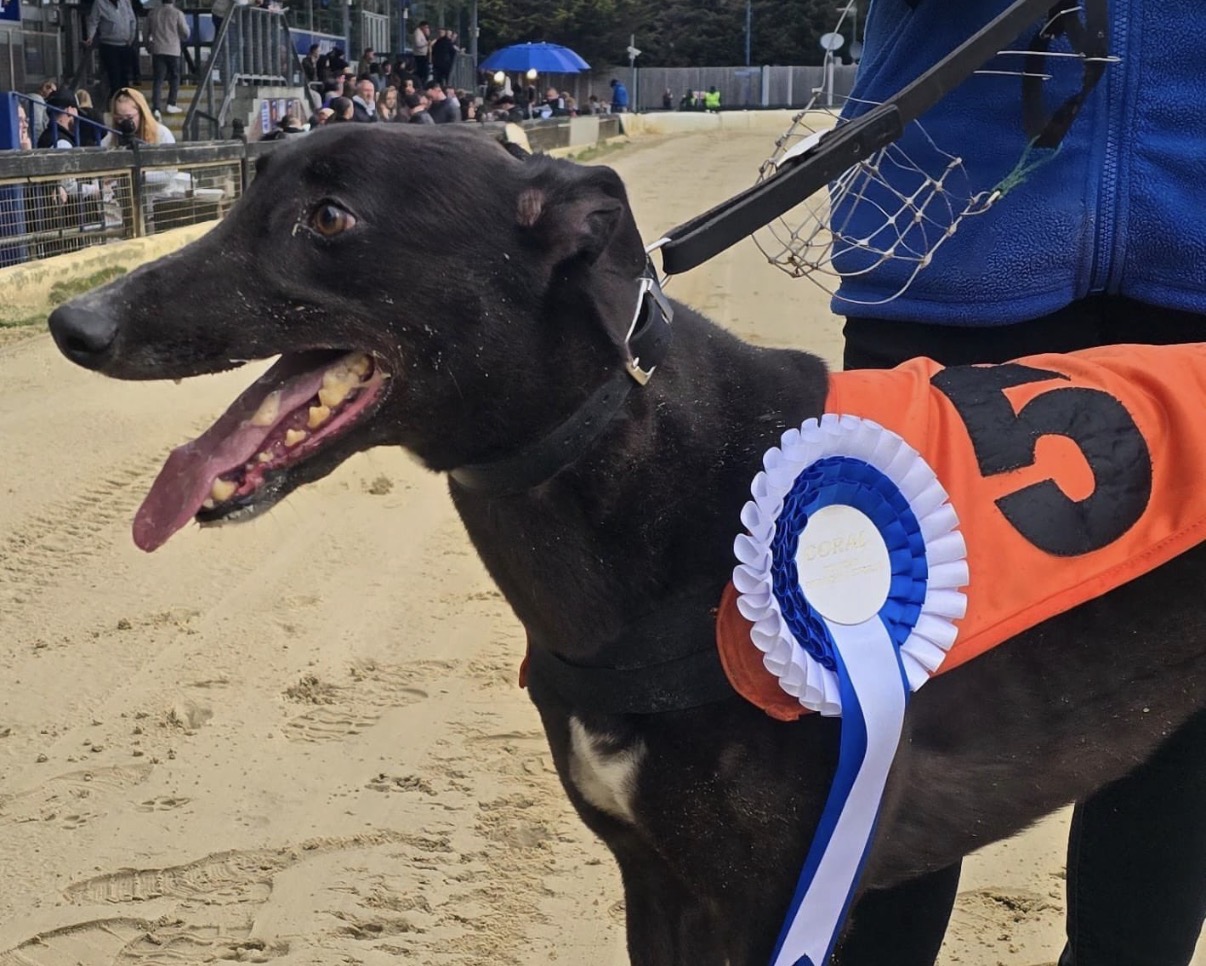
At track level, rehoming has become a visible part of the operation. Romford works with local rehoming partners and supports retired greyhounds through schemes connected to the GBGB Greyhound Retirement Scheme, which is funded by a per-race entry contribution.
6. The Last Track in London
Following the closure of Crayford in January 2025, Romford stands as the only remaining greyhound stadium in the Greater London area. The position gives it the capital’s live-racing audience and a Tier 1 role in the ARC media-rights deal that broadcasts British greyhound racing into betting shops nationwide.
Why Romford Survived When Others Did Not
Romford’s journey from a 1929 backyard experiment to London’s final greyhound stadium tells a story of institutional adaptability. By evolving into a data-driven, hospitality-focused venue, it has held its place as the capital’s sole survivor of a historic British sporting tradition.