
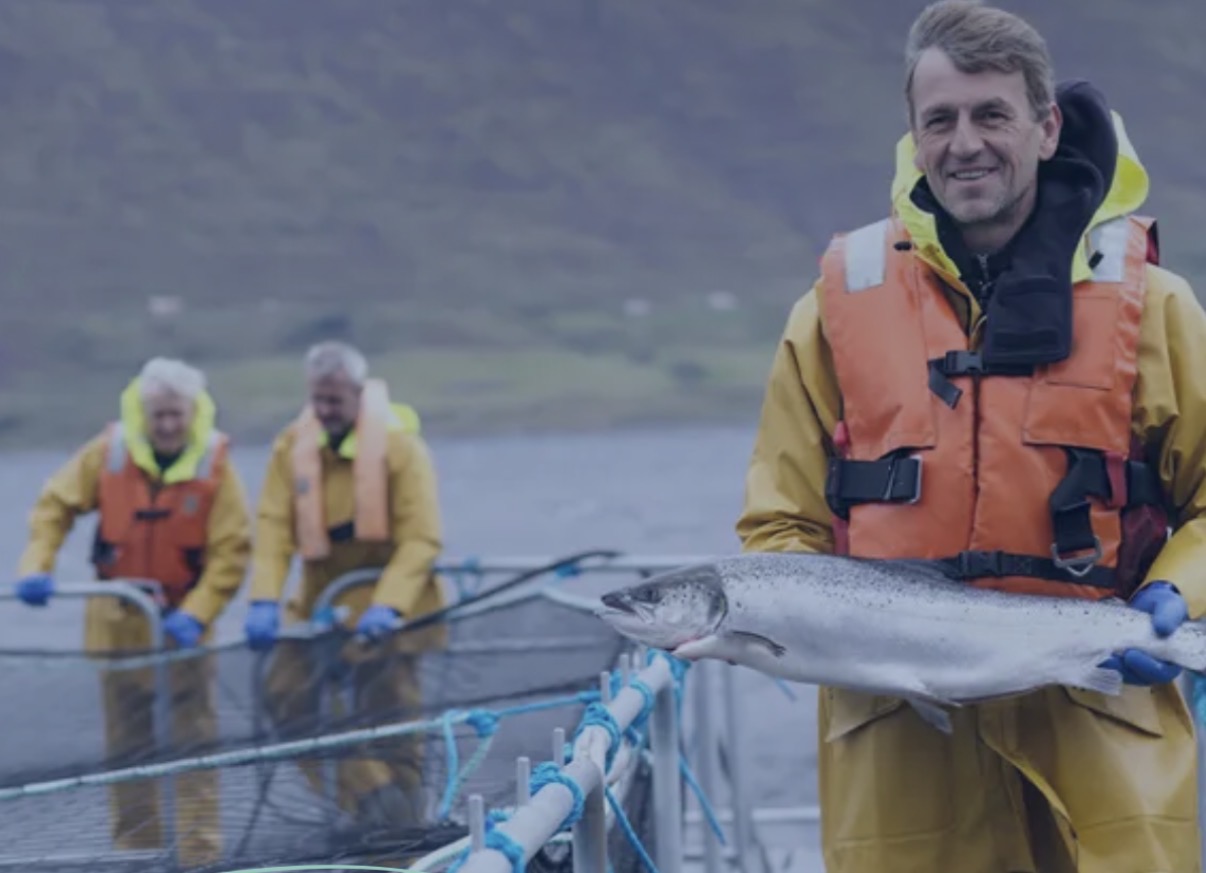
The diets of many people around the world have changed significantly. Fish and other aquatic foods play a greater role today than they did in the past. According to a report by the Food and Agriculture Organisation of the United Nations (FAO), fish is playing an increasingly important role in the global diet. Per capita consumption has risen significantly in recent decades and is growing faster than the world’s population. However, natural stocks in the world’s oceans are not sufficient to meet this demand. This is why companies specialising in aquaculture are becoming increasingly important.
Technologies for sustainable aquaculture
In order to combine growing demand with sustainable production, aquaculture companies are increasingly turning to modern technology. The aim is to use water, energy and feed efficiently in order to protect the environment and fish stocks in the long term.
An example from Essex shows that healthy stocks are important for businesses and regions alike. Hanningfield Reservoir is one of the most popular fishing spots in the region and attracts numerous anglers every year. In one season, over 10,000 visitors gathered there and caught a total of around 24,000 fish.
Water management plays a crucial role in ensuring that fish stocks remain healthy in the long term and that aquaculture companies can produce reliably. Especially in professional aquaculture facilities, where fish are bred in large tanks or recirculation systems, water quality and oxygen content must be continuously monitored. Modern farms therefore rely on technical systems that continuously move and treat water. Aquaculture pumps play a central role in this. They ensure that water circulates through breeding tanks, filter systems and treatment systems, allowing oxygen to be distributed evenly and pollutants to be removed from the system.
Digital control of water quality
In addition to modern pump systems, modern aquaculture facilities operate with continuous monitoring of water parameters. Digital sensors and automated measuring systems are primarily used for this purpose. They determine important values such as oxygen, temperature, pH value and salt concentration around the clock.
All collected data is also evaluated in real time. This allows operators to react quickly if, for example, water conditions change or critical limits are reached. In this way, you reduce the risk of disease within the stocks and improve the efficiency of the entire production process.
In addition, modern filter systems are used to remove organic residues, feed residues and contaminants from the water. Together with stable water circulation, this creates a closed system that reuses water multiple times while reducing environmental impact.
Support programmes for sustainable aquaculture in the EU and the United Kingdom
Politicians are offering companies numerous incentives to help them switch to more sustainable technologies. In the European Union, for example, there is the European Maritime, Fisheries and Aquaculture Fund (EMFAF). This fund supports projects that promote the sustainable use of marine resources and drive innovation in aquaculture.
The transition to more sustainable technologies in aquaculture is not only being driven by companies, but also supported by politicians. Both the European Union and the United Kingdom have support programmes that promote investment in modern and environmentally friendly aquaculture technologies. With the help of this fund, companies can apply for subsidies for technologies that use water more efficiently, reduce energy consumption or improve water quality in aquaculture facilities.