
The UK is one of the safest countries in the world to drive in – accident rates are low relative to global averages. Underpinning this is that road networks and private business premises rely on a universal visual language: shapes and symbols, in standardised colours, designed to be recognisable from far and understood in a split second. For site managers and business owners, knowing all about a road safety sign is not just about passing a driving or HVG test but a contributing factor to keeping British roads safe.
Shapes and colours in the UK signing system
The UK traffic signing system is highly structured. For the most part, it is governed by the Traffic Signs Regulations and General Directions (TSRGD). It’s a simple logic: the shape of a sign tells you its type, and the colour provides the context.
There are three main categories. Each and every professional driver should recognise:
This categorisation helps the human brain to process the urgency of a message. In fact, many, if not most, experienced drivers couldn’t tell you these categories conceptually, from the top of their head. In many ways, they don’t need to, as they subconsciously know. But, in certain moments, we should learn them explicitly as it’s something to fall back on if our subconscious fails us.
The categorisation helps identify its level of urgency from our peripheral vision. This means most of our bandwidth can be allocated to the road and other vehicles, rather than deciphering signs.
So, if a lorry driver sees a red circle from a distance, it immediately prepares the driver to stop or refrain from an action, whereas a blue rectangle suggests a more passive intake of information. So, the colours dictate urgency, too.
Regulatory signs and their instructions
Regulatory signs are important for maintaining order on a site, rather than the road. These signs are usually circularand represent legal requirements that should be followed (to avoid both accidents and prosecution). While they’re not hard barriers like a literal gate or car park entrance barrier, they passively prevent actions.
Within this category, colour again plays a role. Red rings or circles are prohibitions, meaning they tell the driver what they must not do. For example:
Blue circles give more positive instructions and tell the driver what they should be doing, not what they should avoid. For example:
So, blue is the carrot, red is the stick.
Having the correct, standardised road safety symbols placed at entry points and junctions is what helps stop unauthorized access and manage the flow of HGVs. It can prevent accidents, traffic buildups, and noncompliance.
Identifying warning symbols to prevent site hazards
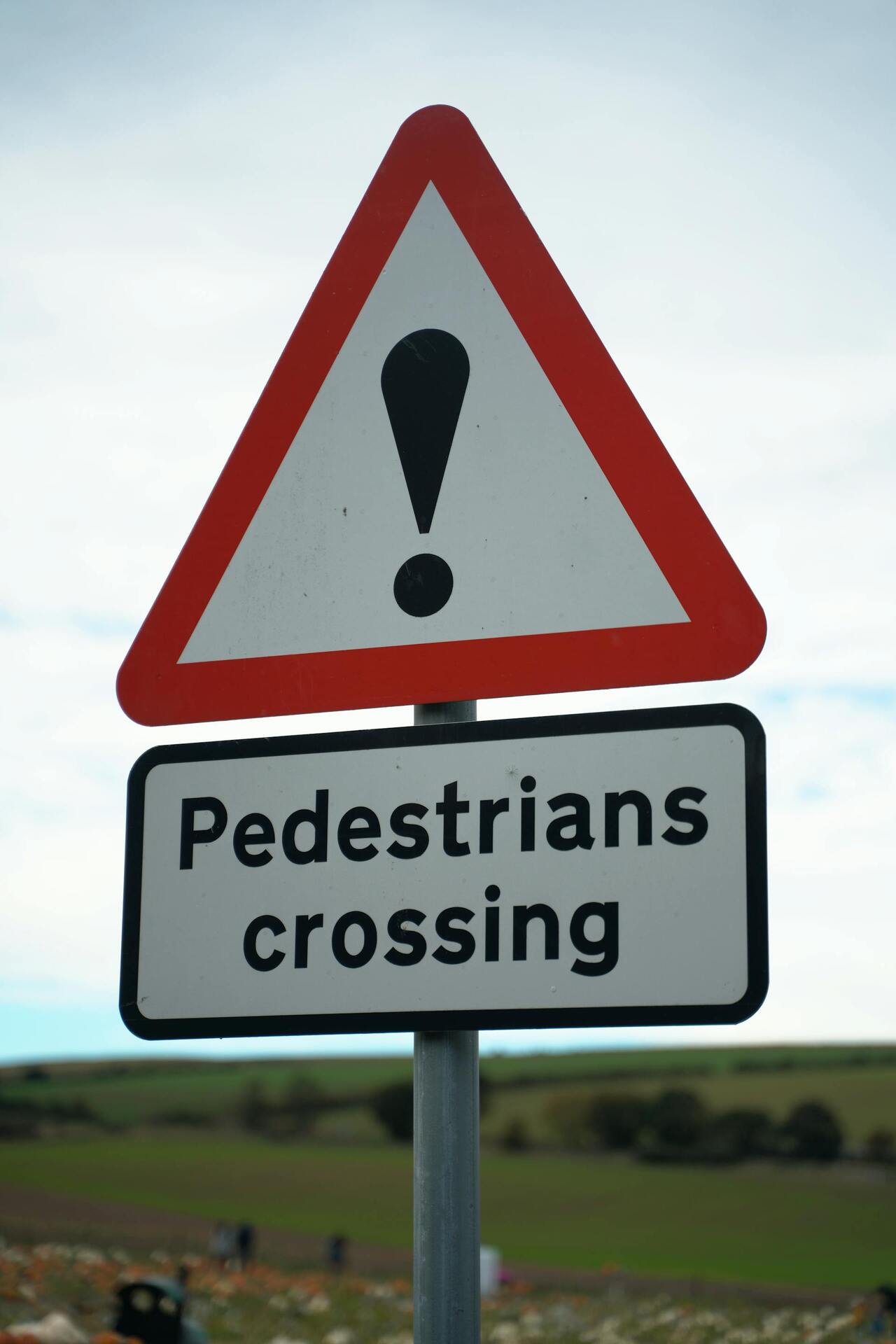
Regulatory signs tell you what to do, commanding you to stop (red) or go somewhere (blue). Warning signs, though, are there to keep you alert to what hazards may lie ahead. These are triangular with a bold red border. The symbol inside the triangle identifies the hazard it’s referring to, be it a sharp bend, steep hill, or potential pedestrians.
In an industrial space, warning signs are needed to alert drivers, be it staff or visitors, to site-specific dangers. So, it could be that there are forklift trucks often ahead, or hidden dips. These often relate to operations or the design of the private space, meaning they’re not always about natural road laws. It requires planning and proactive assessment.
Because these signs are preventative, their placement is of course very important. They should be positioned far enough in advance of the hazard to allow a driver enough time to react and scan for said hazard.
Informational signage for wayfinding
Information signs are rectangular. They may provide:
They’re less urgent that a red stop sign, but they help with efficiency. If they were red, it would clutter and devalue the urgency of hazard-related signs.
On public roads, the colour of these rectangles usually tells you the type of route:
For example, a site may want to direct delivery drivers to Goods Inward. Again, it helps prevent traffic and dangerous U-turns.
Best practices for effective traffic sign management
Businesses need ongoing traffic sign management, not just one-off implementation. A sign is only effective if it is visible and relevant.
Signage is very static, but the strategy around it should not be. It’s about ongoing assessment and adapting to changes in the environment, be it risks, obstructions, or tweaks in efficient traffic flow.