
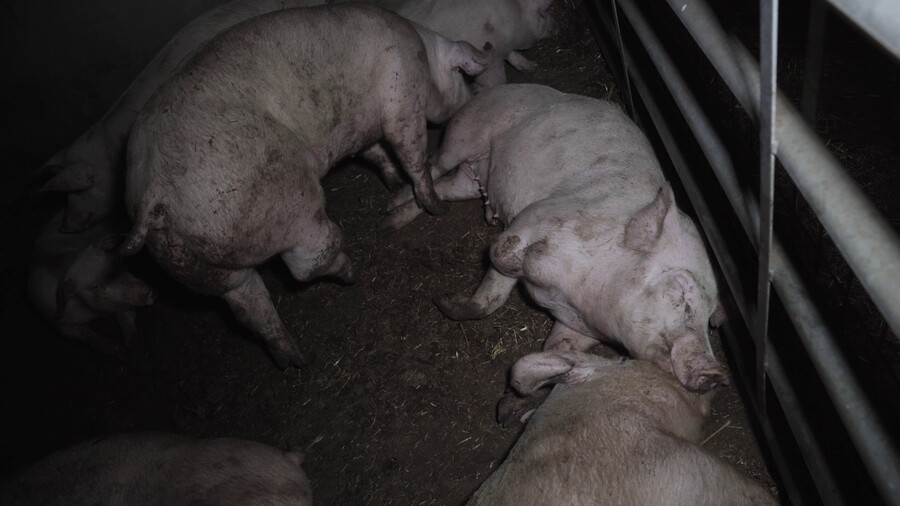
The investigation, carried out by Animal Justice Project (AJP) at Bage Court Farm in Dorstone and revealed last night in The Independent, shows pigs confined in filthy pens, some suffering from severe tail-biting wounds, infected joints, abscesses and lameness.
Images show injured animals left lying in heavily soiled straw, with others unable to stand – raising serious legal and welfare concerns about fitness for transport and slaughter.
But while the RSPCA said the farm had received guidance and that issues were being addressed, independent veterinary surgeon Dr Alice Brough has delivered a damning rebuttal after reviewing the evidence.
“The general conditions on the farm are typical of an RSPCA Assured unit of this type – cramped, squalid and devoid of sufficient stimulation for highly intelligent and hygienic pigs,” she said.
“This is not an unusual scene to find vice behaviours like tail biting as a result of needs not being met and chronic stress.”
‘Hospital pen’ horrors
Particularly disturbing, she said, were scenes filmed inside a designated “hospital pen” – where sick and injured pigs are supposed to recover.
Instead, the enclosure appeared filthy, with pigs suffering from open wounds, swollen joints and severe infections.
“The ‘hospital pen’ itself is far from an appropriate recovery site for injured animals with open wounds, also heavily soiled and lacking sufficient clean, dry bedding,” Dr Brough said.
She warned many animals had been left to suffer unnecessarily.
“They should have been euthanised long before this.”
According to Dr Brough, several pigs shown would likely be unfit to travel under UK law.
“Animals must be able to bear weight on all limbs and walk unaided in order to be legally transported,” she said, adding that carcasses with abscesses would likely be rejected at slaughter.
‘I hope a vet didn’t advise this’
The RSPCA suggested injured pigs were being treated under veterinary advice – a claim Dr Brough openly questioned.
“A vet would advise euthanasia of most of these ‘hospital’ pigs given the extent of their joint infections,” she said.
She added that individual veterinary care on pig units is rare, with treatment often limited to whole-shed antibiotics administered via water systems.
‘Not an isolated case’
In one of the most explosive elements of her assessment, Dr Brough rejected suggestions the footage was unrepresentative.
“A standard claim from the industry following exposé is that footage is ‘not representative of the farm’. Unfortunately, it is – and is also representative of the rest of the industry’s ‘higher welfare’ units.”
She also raised concerns the farm may have had advance warning of inspection following an industry “animal rights alert”.
“A snapshot of an inspection-ready farm often gives an inaccurate picture of the level of suffering experienced by pigs for the rest of the year,” she said.
Scheme credibility questioned
Drawing on years advising pig producers, Dr Brough said she had repeatedly seen welfare guidance ignored.
“Formal warnings and sanctions simply do nothing to encourage farmers to treat pigs like they care, and the RSPCA’s standards are such that much of this is normal under their scheme.”
She concluded with a stark indictment:
“This is certainly nowhere near the worst farm I’ve seen, but from the pigs’ perspective is a life of misery. How the RSPCA can claim to be ‘for every kind’ and allow this to be the norm on their assured units is beyond me.”
Calls for action
AJP says the investigation exposes systemic failures within farm assurance schemes relied upon by millions of consumers.
A spokesperson said:
“People pay more for RSPCA Assured products believing animals are treated well. This footage – backed by expert veterinary testimony – reveals a very different reality. These are not rare breaches. This is standard practice inside a scheme marketed as compassionate.”
The group is now calling for the farm’s suspension from the RSPCA Assured scheme and a wider review of certified pig welfare standards.