
For decades, automotive status was easy to spot. It arrived low, loud, and unmistakably expensive—often painted in bright colours, wearing exaggerated lines, and announcing itself long before it came into view. The supercar era, defined by theatre and spectacle, shaped how wealth and success were expressed on the road.
But something has shifted.
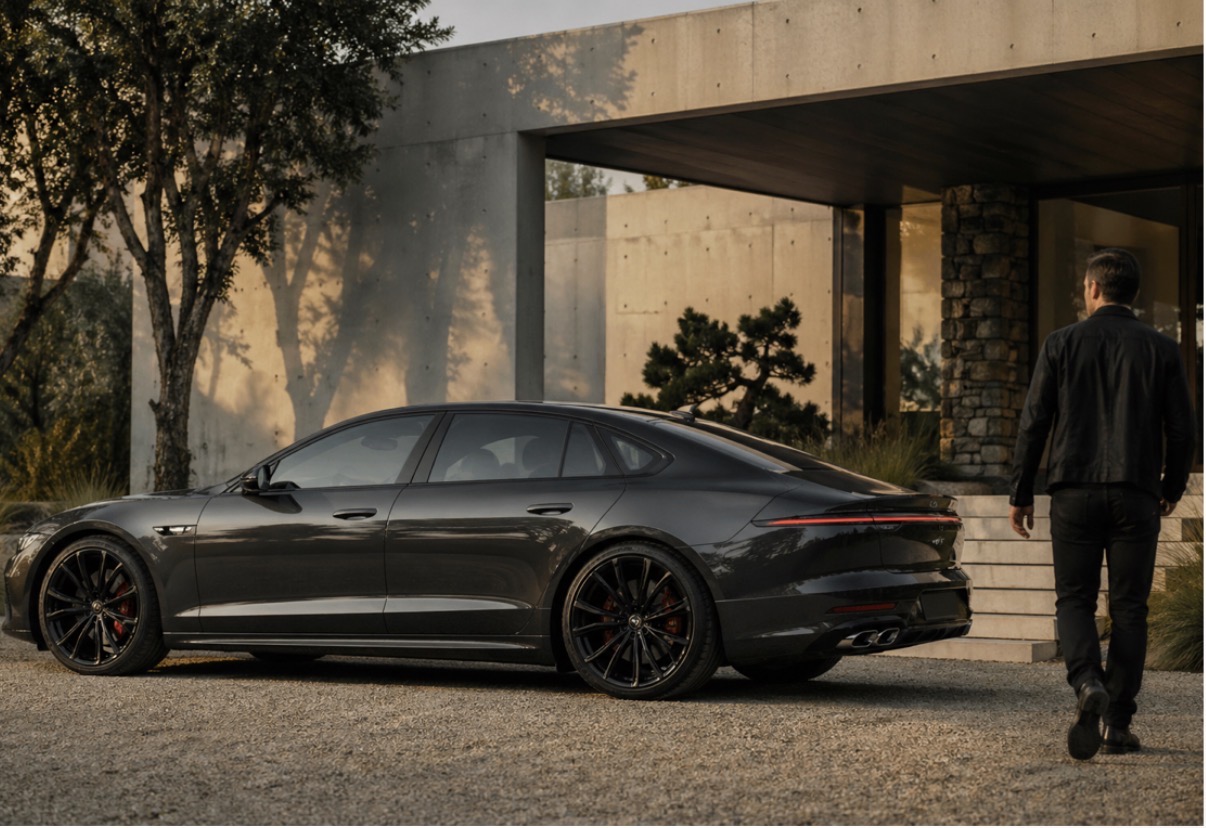
Today’s most discerning drivers are moving away from overt displays of performance and toward something quieter, more deliberate. The new status symbol isn’t the flashiest car in the room—it’s the one that doesn’t need to try.
From Attention-Grabbing to Understated
There was a time when owning a Lamborghini Aventador or a Ferrari 488 GTB was the ultimate signal of arrival. These cars were designed to be seen, heard, and admired. They still are. But for a growing segment of drivers, that level of visibility feels increasingly outdated.
In its place is a more nuanced approach to automotive identity—one that prioritises restraint, craftsmanship, and capability over sheer spectacle.
Enter cars like the Audi RS6 Avant, the BMW M5 Competition, and the Porsche Taycan Turbo S. On the surface, they’re refined, even conservative. But beneath that subtle exterior lies extraordinary performance—often rivaling or exceeding traditional supercars in real-world conditions.
The Psychology of Quiet Confidence
This shift isn’t just about cars—it reflects a broader cultural change.
In fashion, architecture, and technology, there’s been a move toward “quiet luxury”—a preference for quality that doesn’t need to be announced. The same principle now applies to automotive taste. Subtle performance signals confidence. It suggests the owner doesn’t need validation from strangers, nor approval from social media.
There’s also an element of insider knowledge. Recognising the significance of a debadged performance estate or a near-silent EV requires familiarity. It’s a form of coded status—visible only to those who know what to look for.
Performance Without the Drama
Modern engineering has made it possible to package extreme capability in increasingly understated forms.
Take the current generation of high-performance saloons and estates. With advanced all-wheel-drive systems, adaptive suspension, and hybridised powertrains, they deliver immense speed without sacrificing comfort or usability. A car like the RS6 can carry a family and luggage during the week, then outperform sports cars on a motorway slip road.
Electric vehicles have accelerated this trend. The instant torque of models like the Taycan means explosive acceleration is no longer accompanied by noise or visual aggression. Performance has become quieter—literally and figuratively.
The Role of Personalisation
As cars become more subtle in their design language, personalisation has taken on greater importance. When the base vehicle is intentionally understated, the details begin to matter more.
This is where individual expression comes into play—through interior trims, wheel choices, paint finishes, and smaller touches that differentiate one car from another. Even elements as functional as registration plates contribute to the overall aesthetic when done thoughtfully.
For drivers investing in personalisation, companies like Number 1 Plates have seen growing demand from motorists who want their vehicles to reflect their identity, particularly through options like 3D and gel-based designs that add a modern, tactile finish without overwhelming the car’s look.
Social Media and the Evolution of Taste
Interestingly, social media has played a dual role in this shift.
On one hand, platforms have amplified car culture, making it easier than ever to showcase rare and exotic vehicles. On the other, they’ve accelerated fatigue around obvious displays of wealth. When everyone has seen everything, the impact of the traditional supercar diminishes.
In contrast, understated performance cars often generate more engagement among enthusiasts. A clean, well-specified M5 or RS6 can spark deeper appreciation than a predictable supercar post. The conversation shifts from “look at this” to “look closer.”
A More Practical Kind of Prestige
There’s also a practical dimension to this trend. Subtle performance cars tend to be more usable in everyday life. They’re easier to drive, more comfortable over long distances, and less conspicuous in urban environments.
In cities where space is limited and attention can be unwelcome, a low-profile vehicle offers advantages. It allows drivers to enjoy high performance without the compromises—or scrutiny—that come with more extravagant options.
This practicality doesn’t dilute the sense of prestige; it enhances it. Owning a car that excels in multiple roles reflects a more considered approach to luxury.
What This Means for the Future
The move toward subtle performance suggests a broader redefinition of automotive aspiration. It’s no longer about being the loudest or the fastest in a straight line. It’s about balance, discretion, and depth of quality.
Manufacturers are already responding. Performance divisions are focusing more on refinement and integration, less on visual aggression. Electric and hybrid technologies are enabling new forms of performance that don’t rely on traditional cues.
And perhaps most importantly, drivers themselves are becoming more selective. They’re choosing cars that align with their values—not just their budgets.
Conclusion
The supercar isn’t disappearing. It still holds a place in automotive culture as an object of design and engineering ambition. But it’s no longer the default expression of success.
Today, the most compelling cars are often the ones that reveal themselves slowly—the ones that reward attention rather than demand it.
Subtle performance isn’t about hiding capability. It’s about refining how it’s expressed. And in a world where everything competes for attention, that restraint has become the ultimate luxury.