
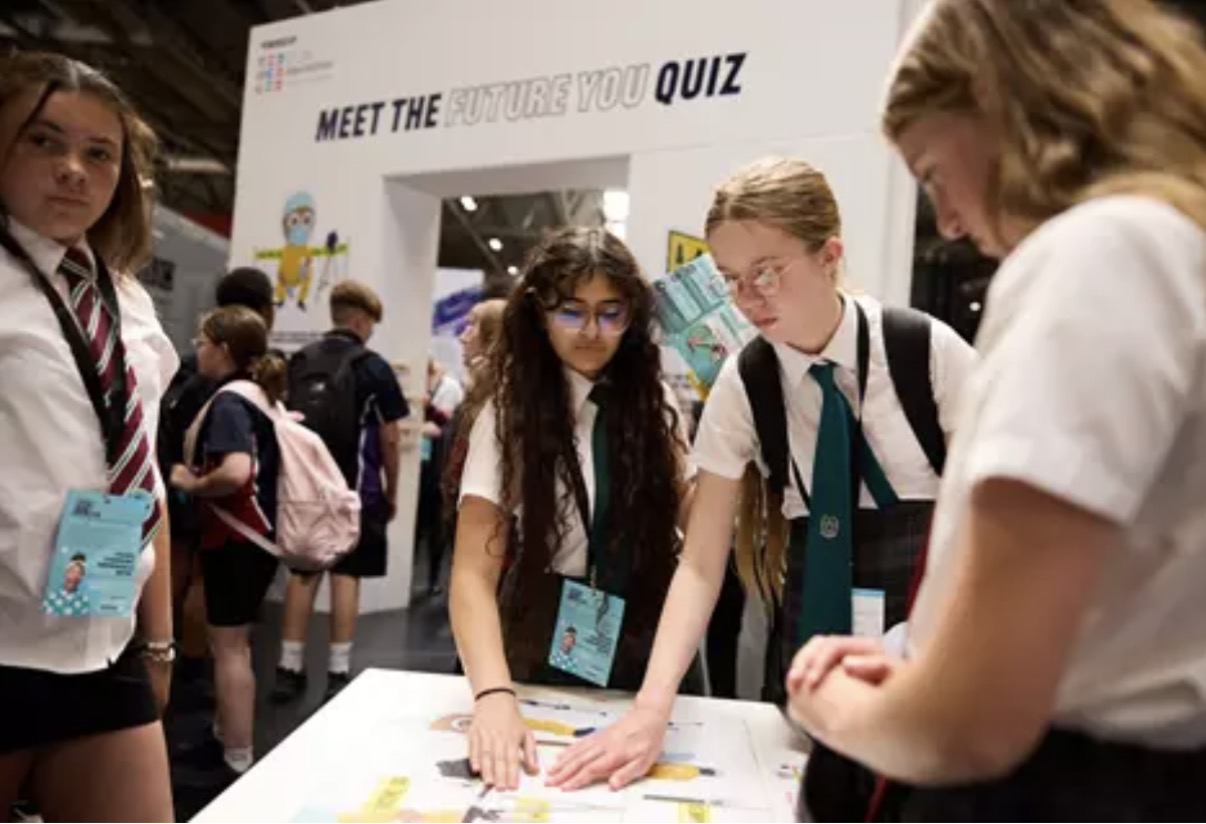
34 young people from across the East of England are selected as finalists of The Big Bang UK Young Scientists & Engineers Competition 2026. Selected from over 800 entrants, the young people will now go through a final round of judging and receive feedback from industry experts, before the winners are announced at an exciting awards ceremony at The Big Bang Fair.
A sustainable floating farm, an AI-powered recycling bin and renewable energy generation through everyday movement, are just some of the innovative science, engineering, technology and maths (STEM) projects battling it out for coveted top prizes.
Local schools and community groups with young people confirmed as finalists are:
Cambridge Electronics and Robotics Club, Cambridge, with a project titled ‘Rapid replanting capsules’
Chase High School, Westcliff-on-Sea, with a project titled ‘The anomaly scout: an AI-powered search for exoplanets and stellar flares’
Debden Park High School, Loughton, with a project titled ‘The “smart-grommet”: a dual-action approach to preventing middle-ear infection’
Freman College, Buntingford, with a project titled ‘Thermoelectric generation: using the seebeck effect to provide renewable energy’
Katherine Warington School, Harpenden, with a project titled ‘Mitasu bins’
King Edward VI Grammar School, Chelmsford, with a project titled ‘BinBot’, ‘BinSmart’, and ‘CardioPredict’
The King’s (The Cathedral) School, Peterborough with projects titled ‘The invisible laser power network – [radio wave powered devices]’, ‘Oralyser’, ‘Endeavour – point nemo’, ‘Astro: no-one should face the infinite alone’ and ‘X-HYDRA: high yield desalination via radial atomisation’
Northgate High School, Ipswich, with a project titled ‘From invisible to visible: testing variables that affect latent fingerprint testing’
Richard Hale School, Hertford, with a project titled ‘Complex fractal plotter’
Top awards on offer include The Big Bang UK Young Engineer (supported by Thales), The Big Bang UK Young Technologist (supported by Siemens), and The Big Bang UK Young Scientist of the Year. Winners of each category will receive a trophy plus £1,000 prize money. Last year students from Freman College, Buntingford, Chelmsford County High School for Girls and King Edward VI Grammar won awards with projects ranging from AI cancer diagnosis and a portable health hub to investigating antimicrobial resistance.
Phillip McShane, Associate Director of Engagement Projects at EngineeringUK commented:
“It’s brilliant to see so many young people making the connections between their own creativity and how STEM can help solve real-world challenges. Once again, the standard of projects has been incredibly high. The environment, AI and health are project themes that continue to be popular as young people look to engineering and technology to provide solutions. This year we continue to see entrants using a greater mix of STEM skills to create their projects.”
A host of special awards supported by key engineering and technology industry partners are also on offer, as well as the EUK Education teacher award for school staff who has gone above and beyond to support students throughout their projects.
James Mackay, Head of STEM in the UK at Thales, commented:
“Congratulations to all the young people who have entered The Big Bang Competition – your curiosity, creativity, and passion for discovering new possibilities are truly inspiring. At Thales, we’re proud to support The Competition for the first time, helping to nurture the next generation of engineers and innovators. I know myself and my colleagues have loved looking over and providing feedback for some of the submissions – it’s been wonderful to see such exciting ideas. Your ideas today have the power to shape a brighter tomorrow, and we encourage you to keep exploring, questioning, and believing in your potential.”
Mark Wood, Social Sustainability Lead, Great Britain & Ireland, at Siemens said:
“Congratulations to all the finalists in The Big Bang Competition, supported by Siemens. As always, the competition has been fierce, but the finalists should be so proud of what they have already achieved, and I look forward to meeting them to hear more about their projects. Technology holds the key to solving the problems we face every day, so competitions like The Big Bang Competition, which embed creativity as well as real world solutions using technology, have never been more important to our environment, our society and our world.”
Finalists will be invited to showcase their projects to industry professionals, employers, and other young people at The Big Bang Fair taking place 9 to 11 June 2026 at the NEC in Birmingham. Winners of The Competition will be crowned at an exciting awards ceremony at The Fair on 9 June.
The annual Big Bang Fair is the largest free celebration of science, technology, engineering and maths (STEM) for young people aged 10 to 13 in the UK. Through hands-on activities, incredible shows and career panels, the fair inspires students about the diverse careers in STEM.