
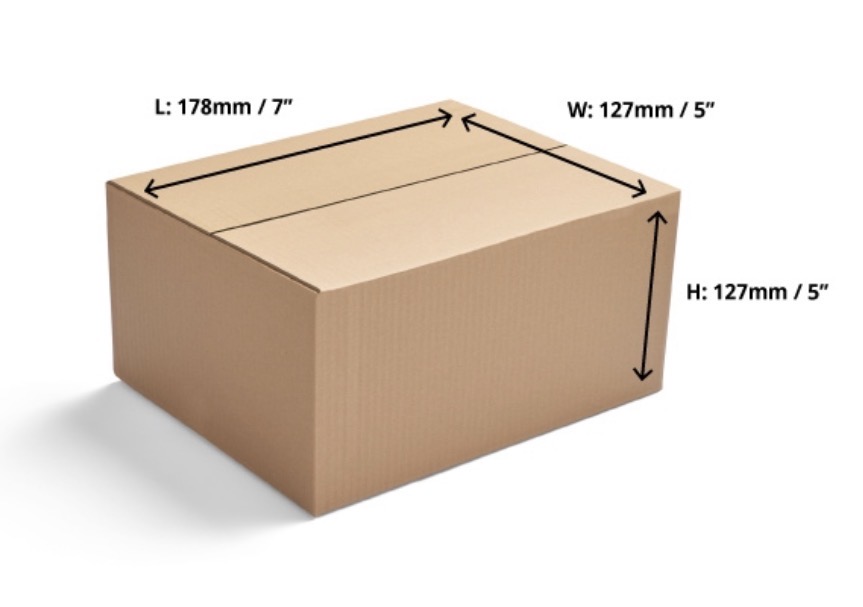
Flat-pack vs pre-assembled shipping boxes for fulfilment comes down to one thing: how your packing operation works day to day. Both formats protect products equally once sealed, but they affect storage, packing speed, and labour in very different ways.
Here’s the quick version:
- Flat-pack boxes save space and usually cost less to store and ship in bulk
- Pre-assembled boxes speed up packing when order volume is high
- Flat-pack works well for standard box sizes your team uses every day
- Pre-assembled makes more sense when product sizes vary and dispatch speed matters
This guide walks you through how to choose based on your order volume, storage space, and the way your team actually packs orders.
Flat-Pack Boxes Cost Less to Store and Ship in Bulk
A flat-pack box takes up roughly 10% of the space of the same box pre-assembled. That matters fast.
If you’re storing 500 boxes in a fulfilment space under 50m², flat-pack gives you a lot more breathing room. You can hold enough stock for a busy week without constantly shifting shelves around or running out of room.
They also ship more units per pallet, which usually means a lower delivery cost per box when you’re ordering in volume. So if you’re buying 1,000 boxes at a time, flat-pack is almost always the more cost-efficient way to hold stock.
The trade-off is simple: someone still has to build each one at the packing station. And when orders are flying out, that time adds up.
Pre-Assembled Boxes Are Faster to Pack at High Order Volumes
Think about a Friday afternoon with 300 orders to get out before a 4pm courier collection.
Every box your team has to fold and tape before they can even start packing is another small delay. Pre-assembled boxes remove that step. You grab the box, pack the item, seal it, label it, and move on.
The time difference depends on your team and the box style, but erecting a flat-pack box typically adds 15 to 30 seconds per order compared with picking up a pre-assembled one. Across 300 orders, that’s 75 to 150 minutes spent on box assembly instead of dispatch.
If your operation regularly works at that pace, pre-assembled boxes have a very strong case on packing speed alone.
Flat-Pack Suits Consistent Product Ranges Better
Flat-pack tends to work best when your team is building the same box sizes again and again.
Once someone has folded the same box 50 times, they barely have to think about it. Muscle memory kicks in. In a setup where you’re using just 2 or 3 standard sizes, the assembly time drops sharply.
Where flat-pack gets slower is on mixed order days. If your team has to stop, choose the right size, and then build it flat before packing, that extra friction shows up in your throughput.
So if your range is tight and predictable, flat-pack can still be efficient. If it changes constantly, it’s usually less smooth.
Pre-Assembled Suits Operations With Variable Product Sizes
Pre-assembled boxes are simply quicker to assess by eye.
A packer can pick one up, hold it next to the product, and know almost instantly if it fits. That kind of visual check takes a couple of seconds. Choosing the right flat-pack size and then assembling it takes longer, especially when product dimensions vary a lot from one order to the next.
If you regularly send a mix of small accessories and larger items, pre-assembled boxes help your team move through that variety faster.
The catch is storage. Pre-assembled boxes take up 8 to 10 times more space per unit than flat-pack equivalents. And if your fulfilment area is under 30m², stocking them in volume can create a storage problem just as quickly as they solve a packing one.
Both Options Protect Products Equally in Transit
The format your box arrives in does not affect how it performs once it’s sealed and handed to a carrier.
What matters is the box construction and how well it fits the product.
Format
A flat-pack box and a pre-assembled box made from the same cardboard grade offer the same level of protection once sealed. The format doesn’t change how the box performs under depot stacking pressure or after a 600mm drop onto a conveyor belt.
Construction
The real protection decision is about wall construction and box size relative to the product, not whether the box arrived flat or already assembled.
If you’re shipping heavier or fragile items, that’s where single vs double wall — and getting the right fit — actually matters.
That’s also where working with a supplier that covers both formats can make things simpler. Priory Direct, for example, stocks flat-pack and pre-assembled boxes in single and double-wall options, helping businesses focus on improving shipping efficiency with the right boxes, without overcomplicating their fulfilment setup.
Which Format Suits Your Sustainability Goals?
Both formats are recyclable, but they behave differently earlier in the supply chain, before the box ever reaches your customer.
Recyclability
Both flat-pack and pre-assembled cardboard boxes are kerbside recyclable across the UK. Your customer disposes of them in the same way, so end-of-life recyclability isn’t the deciding factor here.
Transport Efficiency
Flat-pack boxes ship more units per delivery because they’re compressed. That means fewer vehicle movements per 1,000 boxes delivered to your site.
If reducing the transport footprint of your inbound packaging supply is part of your sustainability goals, flat-pack has a clear advantage in volume.
Compare Flat-Pack vs Pre-Assembled Boxes
| Factor | Flat-Pack | Pre-Assembled |
| Storage footprint | Compact (roughly 10% of assembled size) | Large (full box volume per unit) |
| Packing speed | Slower (add 15 to 30 seconds per box) | Faster (no assembly step) |
| Unit cost | Lower at volume | Higher |
| Inbound delivery cost | Lower per unit | Higher per unit |
| Best for | Consistent ranges, high storage constraints | Variable sizes, high-order volumes |
| Transit protection | Identical once sealed | Identical once sealed |
| Sustainability | Lower transport footprint inbound | Higher transport footprint inbound |
| Kerbside recyclable | Yes | Yes |
Find the Format That Fits How Your Operation Actually Runs
If you’re shipping fewer than 100 orders a week and storage is tight, flat-pack usually makes more sense.
If you’re dispatching 200 or more orders a day against courier deadlines, pre-assembled often earns back its higher cost through faster packing.
The best way to decide is to test both in your own setup. Run each format for a week. Time your team. Look at storage pressure, packing speed, and how smoothly orders move out the door.
That number usually tells you what the right choice is.
FAQs
Are flat-pack and pre-assembled boxes the same strength?
Yes. If they’re made from the same cardboard construction, they offer the same protection once sealed. The format your box arrives in does not affect transit performance.
Which format is better for high-volume ecommerce fulfilment?
Pre-assembled boxes are usually better for high-volume fulfilment because they save 15 to 30 seconds per order. At 200 orders a day, which can recover more than an hour of packing time.
Can I mix flat-pack and pre-assembled boxes in the same operation?
Yes, and plenty of fulfilment operations do exactly that. A practical setup is to use flat-pack for standard sizes your team knows well, and pre-assembled for your highest-volume box size where the time saving justifies the storage space.
Which format is more cost-effective for small ecommerce businesses?
Flat-pack is usually more cost-effective at lower volumes. You get a lower unit cost, lower inbound delivery cost, and far lower storage demand. For operations under 100 orders a week, the assembly time usually isn’t a serious constraint.